UPF 50+, chlorine and the wash: how to read and care for an Ocean Blues swimsuit
What a UPF 50+ rating measures and what it leaves out, why a wet or stretched fabric lets more through, what chlorine and salt do to a nylon and spandex blend, what the care label sewn into a US garment has to say by law, and the wash we recommend, step by step.
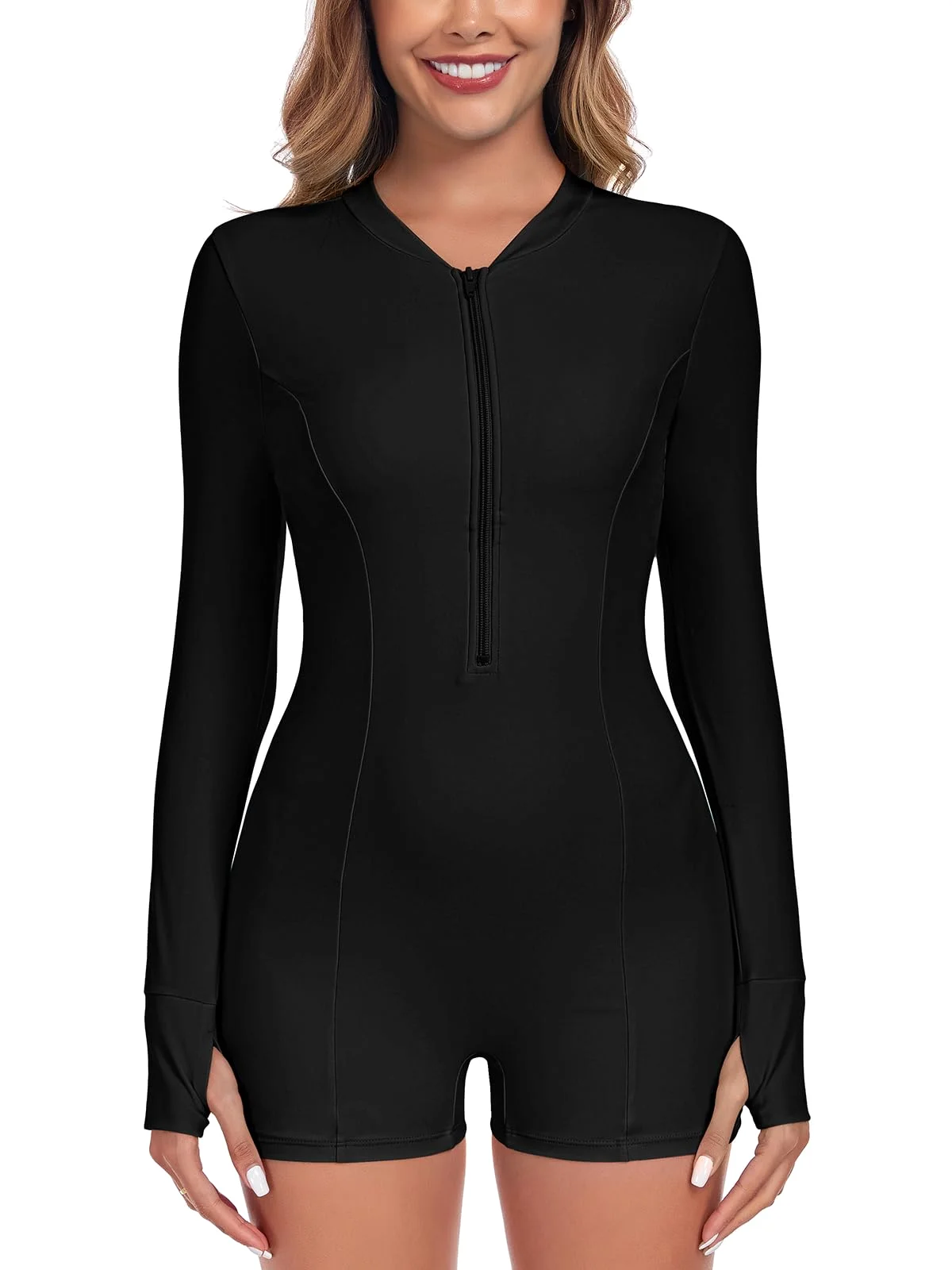
Three of the words printed on a swimsuit tag are doing more work than they look like they are doing. "UPF 50+" is a test result with a definition behind it. "Hand wash cold" is a legal document in four words. And "nylon" or "polyamide" on the fibre line tells you why the first two matter. This is what each of them means, where the definitions come from, and what we would do with a wet Ocean Blues suit on a Sunday evening.
What UPF 50+ measures
UPF stands for ultraviolet protection factor, and it is a number for fabric the way SPF is a number for sunscreen. The Skin Cancer Foundation puts it plainly: a UPF 50 fabric blocks 98 percent of the sun's rays and lets two percent, one fiftieth, through. That is the whole meaning of the figure. It says nothing about how long you can stay out, and nothing about the skin the fabric is not covering.
The same source sets its own bar for a Seal of Recommendation at UPF 50, grades a rating of 30 to 49 one step down, and puts 50+ in its top band. So when an Ocean Blues piece is described as UPF 50+ rated, it is claiming the top band of that scale for the fabric as tested.
Four Ocean Blues pieces carry the rating in their descriptions: the long-sleeve boyleg athletic swimsuit, the long-sleeve moulded-cup swimsuit, the 8-inch pocket board shorts and the 3-inch high-waisted swim shorts. The rest of the range is ordinary swim fabric, and a piece sold without a rating has no rating.
What the rating leaves out
A UPF number is measured on a piece of fabric lying flat, dry and unstretched, and none of those three describes a swimsuit in use.
The Skin Cancer Foundation says it directly: if your clothing gets stretched or wet, it will lose some of its protective ability and become more transparent. The American Academy of Dermatology says the same in fewer words: dry clothing offers more sun protection than wet clothing. Swimwear is wet by definition, and a suit that fits is stretched over the body by definition, so the number on the tag is the ceiling, not the floor.
Coverage is the other half. The rating belongs to the fabric, and the fabric only covers what it covers. A long-sleeve suit with thumbholes covers the arm to the knuckle. A pair of 8-inch board shorts covers the thigh to just above the knee. Neither covers the face, the neck, the hands or the feet. The Centers for Disease Control's list for sun protection puts clothing beside shade, a wide-brimmed hat, sunglasses that block both UVA and UVB, and a broad-spectrum sunscreen. It also notes that in the continental United States the sun is strongest between 10 a.m. and 4 p.m. daylight saving time. The AAD's sunscreen figure is SPF 30 or higher, broad-spectrum and water-resistant; the CDC's is SPF 15 or higher. A rated swimsuit is one item on that list and does not replace the others.
Which is why the descriptions on this site say "UPF 50+ rated fabric" and stop there. The fabric was rated. What happens to your skin depends on the rest of the list.
Dark, tight and dry: what makes a fabric protective
Both the Skin Cancer Foundation and the AAD describe the same three properties. Densely woven or knitted fabric is more protective than sheer or loosely woven fabric. Dark or bright colours absorb more UV than pale ones, so a black suit does more than a white one of the same fabric. And dry beats wet.
The AAD gives a comparison that makes the scale vivid: a long-sleeved denim shirt provides an SPF of about 1,700, while a white t-shirt provides an SPF of about 7. Swim fabric sits nowhere near denim, which is why a rated swim fabric is a specific, tested thing rather than a general property of swimwear.
The practical reading for an Ocean Blues buyer is short. Of the four rated pieces, the black colourways are doing the most, and all four do more on the walk to the water than in it. If sun is the reason you are buying a long-sleeve suit, buy it dark, and buy the hat too.
Chlorine and salt
Every care line on an Ocean Blues piece says the same two things: cold water, and do not use bleach. Household bleach is a chlorine compound in a bottle, and a swimming pool is the same chemistry at a lower dose. So the pool is doing, slowly, what the care line tells you not to do quickly, and the rinse afterwards is not fussiness. It is the instruction on the label applied to the water you were just in.
Salt water leaves the salt behind when it dries, in the fabric and in anything metal. That means the sliders on a wide-strap top, the hook on a cut-out top, the zip on a rash guard. Sunscreen sits in the fabric the same way and does not rinse out of a dry suit. None of this is a defect of the fabric; it is what fabric does when something is left in it, and the fix is the same each time. Rinse it while it is still wet from the swim.
We cannot tell you how many summers a suit will last. That depends on the pool, the sun, the wash and the wearer, and any number we printed would be a guess. What we can say is that a suit rinsed in cold water the same day and dried flat out of the sun is being treated the way its label asks.
The care label, and what US law says it must tell you
Every garment sold in the United States has to carry a permanent care label, under the Federal Trade Commission's Care Labeling Rule. The FTC's guide for businesses sets out what that label has to do. It must be attached permanently and securely. It must stay legible during the useful life of the product. And it must give at least one washing or drycleaning instruction. If a consumer could do something to the garment that would harm it, the label has to warn against it, and the FTC gives "do not iron" as its example.
The rule also has a reading convention that matters for swimwear. When a label says only "machine wash" with no temperature, the FTC's guide says that means the product can be machine washed at any temperature. If it does not say "no bleach", any bleach can be used. So a label that says "hand wash cold, do not bleach" is not being cautious for the sake of it. Under the rule those words are restrictions, and the manufacturer is required to have a reasonable basis for them. The FTC describes that basis as reliable evidence such as experience, industry expertise or test results.
That is why the label wins. Our care advice repeats what the labels say. Where a label sewn into a piece says something different from a paragraph here, the label is the document with the legal weight behind it.
Reading the fibre line
The other label in the seam is the fibre content, and it is governed by a different FTC rule, the Textile Fiber Products Identification Act. The FTC's guide to it requires the generic fibre names and percentages by weight of each constituent fibre, listed in descending order of predominance. Fibres under five percent of the weight are grouped as "other fibers" unless they have a functional significance. The guide's own example of a fibre that can be named below five percent is spandex, for elasticity. The label also has to carry the country where the garment was processed or manufactured and the identity of the maker, either a business name or a registered identification number.
For swimwear the fibre line usually reads as two names. One Ocean Blues piece prints its line in full: the plus-size loose-fit tankini top, at 82 percent polyamide and 18 percent spandex. Several others name their blend without the percentages. The athletic boyshort one-piece is polyester with spandex; the mid-rise high-leg bottom and the strapless twist top are nylon with spandex. Polyamide and nylon are the same generic fibre under two names, and the FTC guide accepts polyamide as an ISO name for it.
The line matters for care because the two fibres behave differently. The nylon or polyester is the body of the fabric and takes the dye. The spandex is the stretch, and it is the part that chlorine, heat and sun wear down. A suit that has gone slack has usually lost its spandex, not its nylon, which is why a stretched-out suit still has its colour.
| Ocean Blues piece | Fibre line as described | Care line as described |
|---|---|---|
| Plus-size loose-fit tankini top | 82% polyamide, 18% spandex | Hand wash cold, lay flat to dry |
| Athletic boyshort one-piece | Polyester blend with spandex | Hand wash cold, no bleach |
| Mid-rise high-leg bikini bottom | Nylon blend with spandex | Hand wash cold, no bleach |
| Strapless twist bikini top | Nylon blend with spandex | Hand wash cold, no bleach |
| Side-tie triangle bikini bottom | Elastic fabric with smooth lining | Machine washable; hand wash cold and air dry recommended |
| Off-shoulder bandeau bikini set | Not stated | Machine washable |
Where the table says "not stated", the description we were given did not say, and we have not guessed.
The wash we recommend
This is the version that follows every care line in the range, so it is safe for all of them.
- Rinse the suit in cold tap water as soon as you are out of it, before it dries. If it has a zip, a hook or sliders, rinse those too. If it has a drawstring or ties, untie them first.
- Take out any removable pads and rinse them separately. They hold water longer than the suit does.
- Wash by hand in cold water with a small amount of a mild detergent, or on the gentlest cold cycle inside a mesh bag if the label allows a machine. No bleach, ever, on any Ocean Blues piece.
- Squeeze, do not wring. Roll the suit in a towel and press.
- Lay it flat to dry, out of direct sun, with the pads out and the ties open. A hanger stretches a wet suit under its own weight, especially a blouson or a loose-fit top.
- Put the pads back in only when both the suit and the pads are dry.
That is the whole procedure. It takes five minutes and it is the same five minutes for a triangle top as for a long-sleeve suit.
Drying, storing and when to retire a suit
Dry flat, as above. Store dry, folded once, not rolled tight around the cups, which is how a moulded cup ends up creased. Between swims on holiday, a suit that is still damp in the morning should go on the towel rail, not back on the body. Fabric that never dries is fabric that never rinses clean either.
Retire a suit when the spandex has gone: when the band no longer holds, the straps have stopped recovering, or the seat has gone sheer where it used to be opaque. Colour is a poor guide, because the nylon keeps its colour long after the stretch has left. Fit is the guide.
Flammability, briefly
Clothing textiles sold in the United States are also covered by a flammability standard, 16 CFR Part 1610, administered by the Consumer Product Safety Commission. It sorts fabrics into three classes by how fast a flame spreads across them. Class 3, the rapid and intense burning class, may not be used for clothing at all. The standard exempts from testing any fabric made entirely of certain fibres or their combinations, and the list includes nylon and polyester. Plain-surface fabrics weighing 2.6 ounces per square yard or more are exempt as well. Swimwear knitted from nylon or polyester with spandex is the ordinary case the exemption describes. We mention it here because it is the third label rule that applies to every piece in the range, not because swimwear is a fire risk.
What to take from this
A UPF rating is a measurement of dry, flat fabric, and a ceiling on what the fabric will do wet and stretched on a body. Four Ocean Blues pieces carry one, and the rest do not. The care line is a legal document and the label in the seam outranks anything written here. The fibre line explains why the wash matters. The nylon keeps the colour, the spandex keeps the fit, and cold water and no bleach are the terms on which the spandex lasts. Rinse the same day, dry flat, keep the pads out until everything is dry. That is the whole of it.
More of this sort of thing is in Swim Notes, and the Ocean Blues deck keeps the whole range one click away on the front page.
This piece is general information about fabric ratings and about how swimwear sold in the United States is labelled. It is not medical advice: a UPF rating describes fabric, not skin, and sun protection is a matter for shade, a hat and sunscreen as well as clothing. The label sewn into a garment is the document that governs its care, and where this piece and a label disagree, the label wins.